
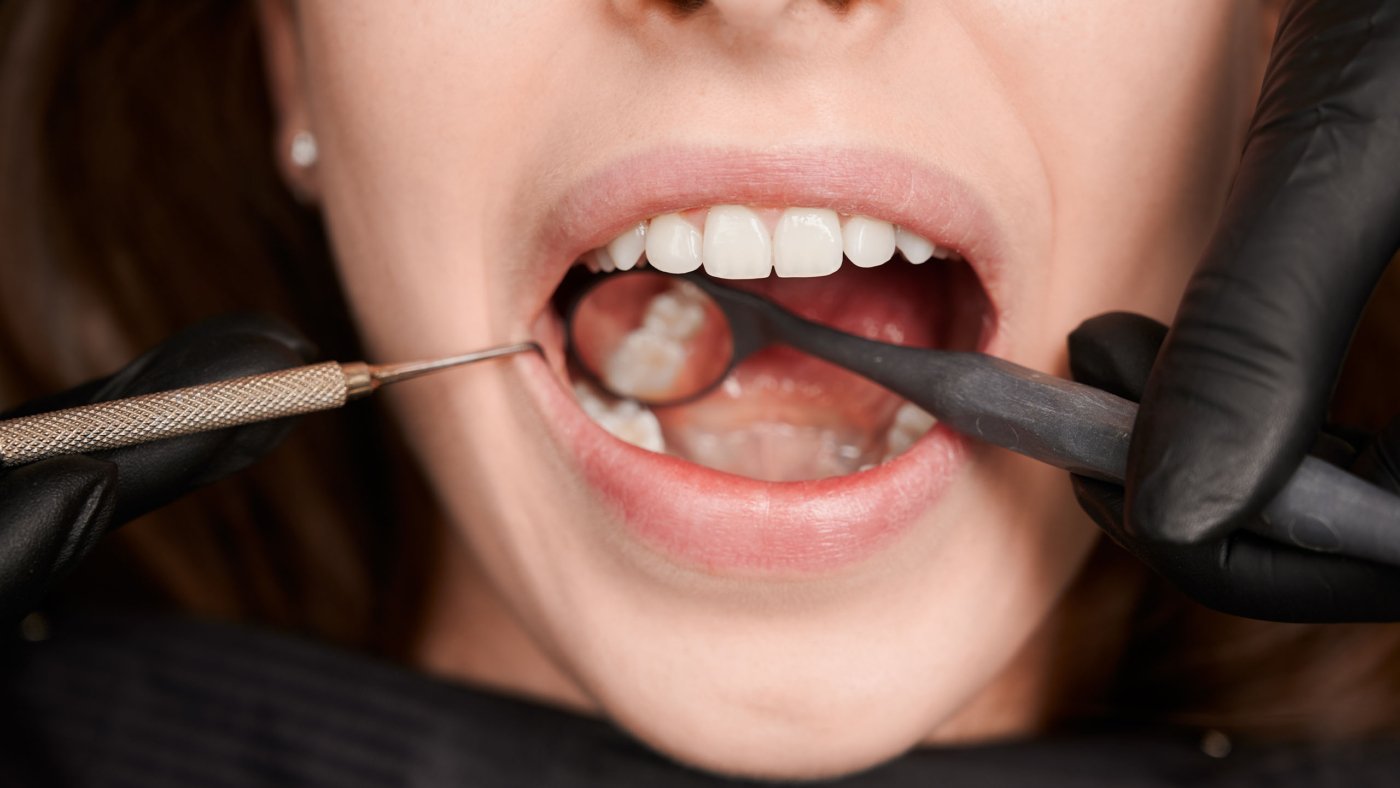
Tooth decay rarely announces itself. Long before a cavity causes pain, it starts as a quiet change in the enamel that’s easy to miss during a normal day, and easy for even a careful brusher to overlook. That’s exactly why early tooth decay is worth understanding: catch it at this stage, and it can often be stopped or even reversed. Miss it, and it tends to progress into something that needs a filling, a root canal, or worse.
In this guide, we’ll walk through what early tooth decay actually looks like, why timing matters so much, how dentists currently find it, and how newer radiation-free technology , including the electrical impedance approach behind Nuclident , is adding another option for early screening.
What Is Early Tooth Decay, Exactly?
Tooth decay begins when bacteria in plaque feed on sugars and starches and produce acid as a byproduct. That acid pulls minerals like calcium and phosphate out of the enamel, the hard outer layer of the tooth. This first stage is called demineralization.
At this point, there’s no hole yet , just a weakened patch of enamel, often showing up as a small white or chalky spot. If the process continues unchecked, the enamel eventually breaks down enough to form an actual cavity, and from there decay can spread into the dentin and, eventually, the tooth’s inner pulp.
The encouraging part: demineralization is often reversible. With fluoride, better oral hygiene, and dietary changes, enamel can remineralize before a true cavity ever forms. That narrow window is what makes early detection so valuable.
The Early Signs of Tooth Decay You Shouldn’t Ignore
Early tooth decay is subtle by nature, but there are a few things worth watching for.
Chalky White or Brownish Spots
The earliest visible sign is usually a dull white spot near the gumline or on a chewing surface, signaling that minerals are being lost. Left alone, these spots can darken to brown or black as decay progresses.
Sensitivity to Hot, Cold, or Sweet
As enamel thins, it becomes easier for temperature and sugar to reach the more sensitive dentin layer underneath. A quick twinge when you drink something cold or bite into something sweet can be one of the first physical clues something is changing.
Mild, Occasional Discomfort
Early-stage decay usually doesn’t hurt. A fleeting ache that comes and goes , rather than a constant, sharp pain, is more typical at this stage, and it’s often dismissed for that reason.
Bad Breath or an Unpleasant Taste
A buildup of bacteria around a decaying area can contribute to persistent bad breath or an off taste, even with regular brushing.
The tricky part is that many people experience none of these until decay has already advanced. That’s why routine dental visits, not just symptom-watching, remain the most reliable way to catch problems early.
Why Catching Decay Early Actually Matters
Tooth decay is extremely common. According to the CDC’s National Center for Health Statistics, roughly 9 in 10 adults aged 20–64 in the U.S. have experienced dental caries at some point, and about a quarter have decay that’s currently untreated. Among children, national surveillance data shows that more than 1 in 10 kids aged 2–5 already have at least one untreated cavity in their baby teeth, a figure that climbs to nearly 1 in 5 by ages 6–8.
Catching decay before it becomes a cavity matters for a few practical reasons:
- It can still be reversed. Once a cavity has formed, the damage is permanent and needs a filling. Demineralization often isn’t.
- It’s cheaper. A fluoride treatment or improved hygiene routine costs far less than a filling, crown, or root canal.
- It prevents bigger problems. Untreated decay can progress to infection, abscess, or tooth loss , all of which are more painful and expensive to treat.
How Dentists Currently Detect Tooth Decay
Visual and Tactile Exams
A dentist’s trained eye, combined with a dental probe, remains a frontline tool for spotting visible spots, texture changes, or soft areas on a tooth. It’s fast and requires no special equipment, but it’s also somewhat subjective and can miss decay hidden between teeth or under existing fillings.
Dental X-Rays
Bitewing and periapical X-rays let dentists see between teeth and below the gumline, areas a visual exam can’t reach. Modern dental X-rays use very low radiation doses, and the American Dental Association follows the ALARA principle — “as low as reasonably achievable” — to keep exposure minimal. Current ADA guidance also emphasizes that how often X-rays are needed isn’t one-size-fits-all; it depends on a patient’s individual risk factors, age, and dental history, not a fixed yearly schedule.
Where Traditional Methods Fall Short
Even with both tools, very early lesions — especially on smooth surfaces, before a cavity has actually formed — can be difficult to catch. Visual exams depend on the examiner’s experience, and small early-stage changes don’t always show up clearly on an X-ray. This gap is part of why researchers have spent decades looking for additional, complementary ways to screen for decay sooner.
A Newer Approach: Electrical Impedance Technology
One of the more established research directions in this space is electrical impedance spectroscopy (EIS) — a technique that’s been studied in dental research since the 1950s and has picked up renewed interest as digital and AI-assisted tools have matured.
The underlying idea is fairly simple: healthy, mineral-dense enamel resists the flow of a small electrical current. As enamel demineralizes and becomes more porous, it lets more current through. By measuring that resistance (impedance) across a tooth, it’s possible to pick up early structural changes that aren’t yet visible to the eye or obvious on an X-ray.
This is the principle behind Nuclident’s approach. In practical terms, the process looks like this:
- A small, safe electrical current is applied to the tooth.
- The device measures impedance — how much the tooth resists that current — across different areas.
- Software analyzes the readings and generates a conductivity map, flagging regions with lower impedance as areas worth a closer look.
Because it doesn’t use ionizing radiation, this kind of screening can be repeated more freely and is generally considered comfortable for patients who need extra caution around radiation exposure, such as children or pregnant patients.
A note on the evidence: research into electrical impedance and conductance methods for caries detection is real and ongoing, and individual studies have reported accuracy that compares favorably with visual or radiographic exams in specific settings. At the same time, a 2021 Cochrane systematic review of electrical conductance devices found the overall evidence base still limited, with results varying across studies and devices. In short, this is a genuinely promising and active area of dental research — but it’s best understood as a developing field, not a settled, universally validated replacement for existing diagnostic methods. As with any diagnostic technology, it’s worth asking your provider what evidence supports the specific device they’re using.
Importantly, impedance-based screening is designed to complement, not replace, dental X-rays. X-rays remain the standard for seeing between teeth, evaluating bone levels, and diagnosing issues below the surface. A tool like Nuclident is intended to add an additional, radiation-free layer of early screening , the kind of quick check a dentist might use more often precisely because it doesn’t involve radiation , while X-rays and clinical judgment continue to guide diagnosis and treatment decisions.
What This Could Mean for Preventive Dental Care
The appeal of radiation-free screening isn’t that it eliminates the need for X-rays , it’s that it opens the door to more frequent, lower-friction monitoring. A quick, non-invasive scan at each check-up could help dentists track subtle changes over time, flag areas worth watching, and decide more precisely when an X-ray or further evaluation is actually needed.
If your dental clinic offers this kind of technology, it’s worth asking how it fits into your overall care plan alongside, not instead of, the imaging and exams your dentist already recommends.
Practical Steps to Protect Your Teeth from Early Decay
- Brush twice a day with fluoride toothpaste, and don’t rinse it away immediately afterward.
- Floss daily to clear plaque from between teeth, where decay often starts unnoticed.
- Limit frequent snacking on sugary or acidic foods and drinks, it’s the frequency of acid exposure, not just the amount of sugar, that matters most.
- Drink fluoridated water where available, or ask your dentist about supplemental fluoride.
- Keep up with regular check-ups, so your dentist can catch changes before you’d notice them yourself. Ask what screening schedule makes sense for your individual risk level.
- Consider sealants for kids, which add a protective barrier over the deep grooves in molars where decay commonly starts.
When to See a Dentist
Don’t wait for pain. If you notice a new white or dark spot, unusual sensitivity, or breath that doesn’t improve with brushing, it’s worth getting checked, early tooth decay is far easier to manage than a full-blown cavity. And if it’s simply been a while since your last visit, that’s reason enough on its own.
The Bottom Line
Early tooth decay is common, mostly painless, and easy to overlook, which is exactly why regular dental visits matter more than waiting for symptoms. Whether your dentist uses a visual exam, X-rays, or newer radiation-free tools like Nuclident’s electrical impedance screening, the goal is the same: catching decay while it can still be reversed, not after it’s already become a problem.
Ready to stay ahead of tooth decay? Talk to your dentist about your screening options, and ask whether radiation-free impedance technology is available at your next visit.
Sources: CDC National Center for Health Statistics (Oral Health Surveillance Report; Dental Caries and Tooth Loss in Adults, NCHS Data Brief No. 197); American Dental Association (Radiographic Imaging guidance, ALARA principle); Cochrane Database of Systematic Reviews, “Electrical conductance for the detection of dental caries” (2021); Cleveland Clinic, “Cavities (Tooth Decay).”